Many spiders reach their maximum size about this time of year, having spent the summer eating, which helps explain their starring role in Halloween decorations. Researchers at the University of California, Davis, have found one particular trapdoor spider, Aptostichus stephencolberti, which is about the size of a quarter, is big in another way: It has an outsized genome.
California produces 2.4 billion pounds of cheese each year and the leftovers from making your favorite feta, gouda and cheddar could be the source of compostable biodegradable plastics like packaging, spoons and cup liners.
Researchers at the University of California, Davis, are working with the dairy industry to turn these so-called co-products or byproducts into bioplastics, and scaling up the technology could help the state meet a goal for all single-use packaging to be recyclable or compostable by 2032.
We’re settling into fall with beautiful weather, good company and lots of reasons to celebrate! Earlier this month, we honored nine exceptional people for their outstanding achievements, support, leadership and service to the college with an Award of Distinction. We had a wonderful time celebrating CA&ES at the new Resnick Center for Agricultural Innovation where faculty and students showcased examples of their work.
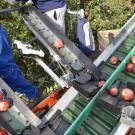
You’ve likely heard this assumption: When AI-enabled and autonomous machines arrive on the farm, jobs will disappear. But researchers at the University of California, Davis, who studied 16 fruit tree operations in California and Washington for three years, found that automation still takes human knowledge. What changes is how the work gets done.
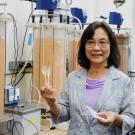
Kristin Kiesel, a professor of teaching in the Department of Agricultural and Resource Economics, is the new associate dean for Undergraduate Academic Programs as of Oct. 1.
Kiesel, who joined UC Davis in 2015 is known as a kind, inclusive and supportive role model who teaches undergraduate and graduate courses in several topics, including behavioral economics, cooperative business enterprise and agricultural commodity markets.
Jorge Dubcovsky, distinguished professor in the Department of Plant Sciences at the University of California, Davis, and a Howard Hughes Medical Institute researcher has been named the 2026 World Agriculture Prize Laureate in the category for countries classified as having a developed economy.
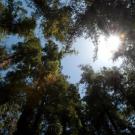
California’s iconic coast redwoods are used to growing in cool, coastal areas where the average temperature is around 59 degrees Fahrenheit. But as average yearly temperatures rise and heatwaves push to 100-degree-plus spikes, the trees are responding by slowing the very operation that nourishes them, according to a study from the University of California, Davis.
I am so excited for the start of the new school year! This week has been filled with amazing events! We kicked off the last couple of weeks with our first year and transfer College Welcome events to celebrate our new students, enjoyed a sweet treat at the ice cream social and gathered together to welcome our Aggie Jumpstart students. You can feel the energy and enthusiasm on campus as we gear up for another great fall quarter!
The bright orange plumes of water scientists first noticed billowing across a river in Alaska’s Brooks Range in 2018 were even more acidic and metallic than water leached from metal mines, despite their pristine surroundings. That is according to a new study from the University of California, Davis, of six of the impacted watersheds.
The study, published in the journal AGU Advances, found that these metals can travel far and become more toxic as they go. Metal concentrations were about 70 times higher as much as 60 miles downstream from where they entered the river.