


Building ‘Tiny Homes’ for the Future of Food
With a rising global population and environmental instability, global scientists are working diligently toward a more food-secure future. One avenue many are investigating is how engineered biomaterials can influence food production, creating a path toward sustainability. According to PubMed, the topic slowly gathered steam in the early 2000s, averaging nearly 100 articles per year for about a decade, but has seen a recent uptick with over 1,000 articles published in 2025.
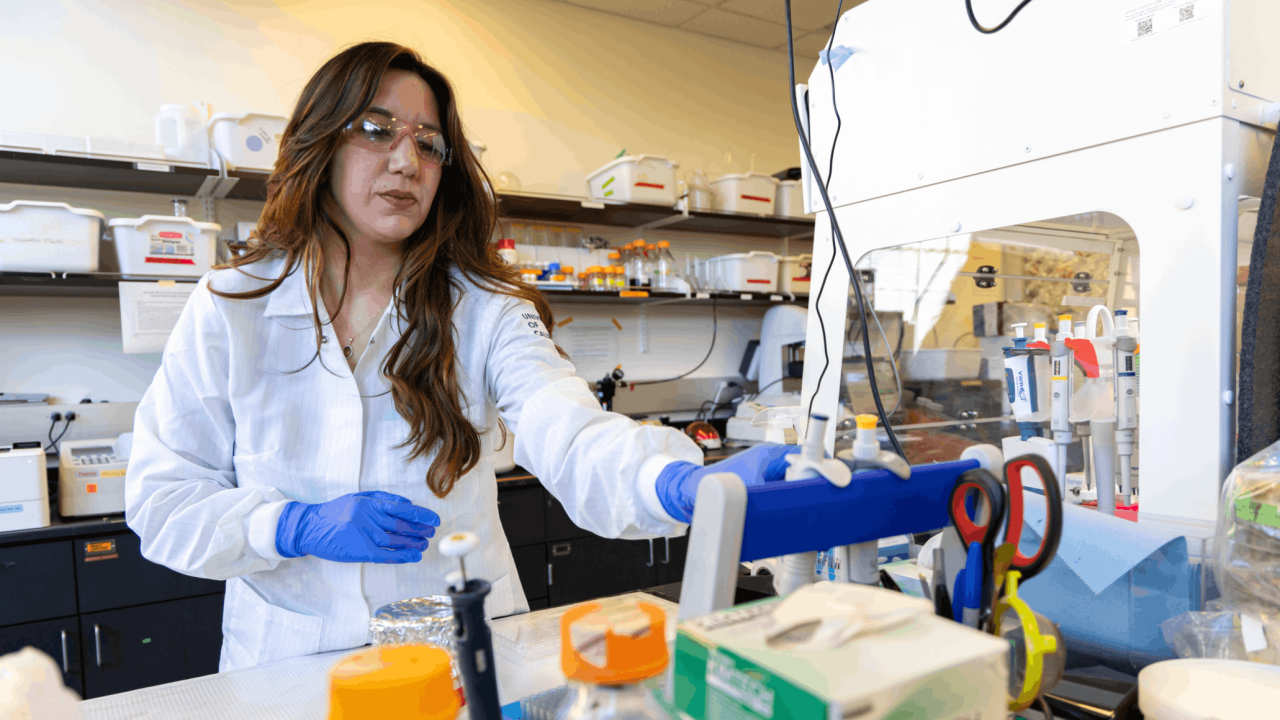
Begum Koysuren, a fourth-year Ph.D. candidate in biological systems engineering at the University of California, Davis, is one such scientist, working to harness nature’s inherent organizational principles to transform how food is produced.
In the lab of Nitin Nitin, a professor of biological and agricultural engineering, Koysuren combines biology, materials science and engineering to design functional, edible scaffolds made of biological materials — namely, fungus and yeast — that nurture animal cells, such as those in cultured meat.
We spoke with Koysuren, who has published papers in Nature Reviews Materials and Current Research in Food Science, about how she’s paving the way for sustainable food production, finding inspiration in nature’s systems and the “wow” factor of biomaterials engineering.
How do you describe your research?

My work combines biology and engineering to develop safe, scalable materials that could change the way we produce food.
I create tiny “homes” for animal cells transforming fungi and yeast through enzymatic and material modifications, designing structured environments that guide cell attachment and growth. These edible fungal-based scaffolds give cells a place to attach, grow and form structures, helping pave the way for cultured meat and other sustainable foods.
The principles of my edible biomaterials engineering work extend to designing structured microbial and plant-based foods, hybrid protein systems and functional foods with tailored texture and nutrition. These scaffolds could also serve as platforms for delivering nutrients or bioactive compounds in controlled ways.
More broadly, this research advances how we understand and guide living systems within edible materials, opening possibilities for sustainable food manufacturing and future biomaterials development.
Have you always been interested in biological systems engineering?
Even as a child, I was fascinated by watching nature quietly organize itself. Plants grow without instruction; ecosystems find balance; and life unfolds without central control. That instinct to observe patterns across systems first drew me to the biological sciences, but I was equally drawn to structure, logic and design.

When I discovered biological engineering, I found a discipline that bridges both worlds. It does not force nature into rigid systems but instead works with its inherent intelligence. I chose this path because it offered a new perspective, one that moves beyond understanding living systems to thoughtfully designing with them by applying systems thinking and structure to guide cells and biological materials toward purposeful outcomes.
What is your long-term goal with this research?
My long-term goal is to develop edible scaffolds that are safe, scalable and versatile enough to support cultured meat production at commercial levels. Beyond food, I hope this research inspires new approaches in biomaterials design, showing how engineering living systems can solve real-world challenges. Ultimately, I want to combine innovation, sustainability and accessibility to help transform how we produce and think about food.
What is exciting to you about this research?
What excites me most is witnessing the “wow” of edible biomaterials engineering, seeing fungi and yeast naturally organize into structures that support cell growth. Each experiment sparks scientific curiosity, as I explore how living systems behave, adapt and interact on their own terms.
Why, to you, is this research important?
For me, the thrill is in creating something living out of the materials we often overlook, like fungi and yeast, and in guiding these materials while also letting nature do its own work, creating scaffolds that could one day transform sustainable food production.
Seeing cells grow and organize on the scaffolds I design makes the invisible processes of life tangible. Knowing that it could help produce food in a better way makes it meaningful. This research combines my fascination with living systems and my desire to make a real-world difference.
Media Resources
- Jessica Heath, College of Engineering, [email protected]