AES

Scientists Unlock Key to Drought-Resistant Wheat Plants with Longer Roots

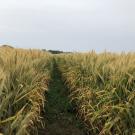
Growing wheat in drought conditions may be easier in the future, thanks to new genetic research out of the University of California, Davis.

An international team of scientists found that the right number of copies of a specific group of genes can stimulate longer root growth, enabling wheat plants to pull water from deeper supplies. The resulting plants have more biomass and produce higher grain yield, according to a paper published in the journal Nature Communications.

Grassland Study Examines Soil Viral Diversity in Drought Conditions

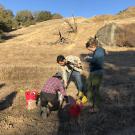
Viral communities across a grassland area are not uniform, and understanding viral dynamics could lead to better insight into how bacteria in soil will react to drought and other climate changes, according to research out of UC Davis.

Viruses can affect microbes, the food web, the carbon cycle and other ecosystem processes, including controlling bacteria.

UC Davis Awarded Grant to Advance Strawberry Breeding, Genetic Tools

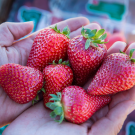
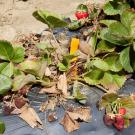
The federal government is awarding $6.2 million to University of California, Davis, to study how to use breeding and genetic information to protect strawberry crops from future diseases and pests.

The four-year grant from the National Institute of Food and Agriculture (NIFA) centers on addressing expanding and emerging threats to strawberries, a popular fruit packed with Vitamin C and key to the diets of many Americans.

Growing Cereal Crops With Less Fertilizer

Researchers at the University of California, Davis, have found a way to reduce the amount of nitrogen fertilizers needed to grow cereal crops. The discovery could save farmers in the United States billions of dollars annually in fertilizer costs while also benefiting the environment.

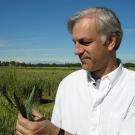
The research comes out of the lab of Eduardo Blumwald, a distinguished professor of plant sciences, who has found a new pathway for cereals to capture the nitrogen they need to grow.

Could Vines Be the Answer to Speeding Urban Cooling, Water Reduction in the West?

Perhaps trees aren’t the only green solution when it comes to cooling urban spaces and reducing energy costs. Honeysuckle, Virginia creeper, pink trumpet and other vines could be a fast-growing substitute in climate-smart cities of the future.

Researchers from UC Davis are leading a nearly $880,000 federal grant to study how vines may provide cooling and shade in Western states in less time than it takes a tree to grow tall.

Older Wildfire Smoke Plumes Can Affect Climate

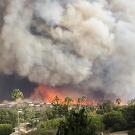
Aerosols carried in wildfire smoke plumes that are hundreds of hours old can still affect climate, according to a study out of the University of California, Davis. 

The research, published in the journal Environmental Science and Technology, suggests that wildfire emissions even 10 days old can affect the properties of aerosols — suspended liquid or particles that are key to cloud formation. 

UC Davis Team Identifies Wheat Gene that Increases Yield

A team of scientists from University of California, Davis, have identified a new gene variant in wheat that can increase the amount of the grain produced, new research published in the journal PLOS Genetics finds.

Wheat is a staple of food diets worldwide and the gene discovery could allow farmers to grow more food without increasing land use. Increased yield could also lower consumer prices, making the crop more accessible.

Study Challenges Evolutionary Theory That DNA Mutations Are Random

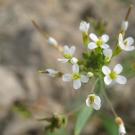
A simple roadside weed may hold the key to understanding and predicting DNA mutation, according to new research from University of California, Davis, and the Max Planck Institute for Developmental Biology in Germany. 

The findings, published today in the journal Nature, radically change our understanding of evolution and could one day help researchers breed better crops or even help humans fight cancer.