Viruses in soil may not be as destructive to bacteria as once thought and could instead act like lawnmowers, culling older cells and giving space for new growth, according to research out of University of California, Davis, published in the journal Nature Ecology & Evolution.
At first glance, Orobanche ramosa looks like an interesting blossoming plant, one that could add a unique flair to flower arrangements. But it’s a parasitic weed that attaches to roots, sucks out nutrients and is threatening California’s lucrative $1.5 billion processing tomato industry.
Satellite data from across California’s landscapes reveal an increase in nitrogen dioxide levels in remote forest areas, and wildfire and soil emissions are likely the reasons why, according to a paper from University of California, Davis, published today in the journal Environmental Research Letters.
Researchers from the University of California, Davis, and an international team of scientists used the genome-editing tool CRISPR-Cas to create disease resistant rice plants, according to a new study published in the journal Nature June 14.
Wetlands, coastal areas and offshore waters near Alabama, Louisiana and Texas have more inactive oil and gas wells than producing ones, and the cost to permanently plug and abandon them could be $30 billion, University of California, Davis, researchers suggest.
Chickens provide one of the world's most popular animal proteins, with billions of birds grown every year for eggs and meat. Interpreting the farm animal’s genome is vital for understanding how genes control traits, such as growth, feed efficiency, reproduction and disease resistance.
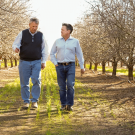
On a warm February afternoon, Kirk Pumphrey walks down his rows of almond trees at Westwind Farms in Yolo County. He notices the buds on the branches have already sprouted pink. It worries him. The earlier the trees bloom, the more likely winter frost will damage the nuts. Early blooms are occurring more often as higher temperatures from climate change stimulate plant growth.
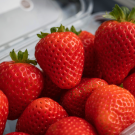
The University of California, Davis, is releasing five new strawberry varieties that are resistant to the soilborne disease Fusarium wilt, have high yields and improved fruit quality.
UC Eclipse, UC Golden Gate, UC Keystone, UC Monarch and UC Surfline will be available for sale to California nurseries from Foundation Plant Services in April.
Taylor Swift: A cultural icon, controversial TicketMaster name, and now a remote phenotype (plant trait) monitoring machine.
Plant Sciences Assistant Professor Troy Magney is a Swiftie to his core. After listening to Swift’s album Folklore on repeat while he was coding and building the instrument in his lab, naming his machine after her was a natural progression.
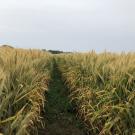
Growing wheat in drought conditions may be easier in the future, thanks to new genetic research out of the University of California, Davis.
An international team of scientists found that the right number of copies of a specific group of genes can stimulate longer root growth, enabling wheat plants to pull water from deeper supplies. The resulting plants have more biomass and produce higher grain yield, according to a paper published in the journal Nature Communications.