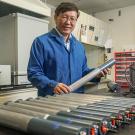
What if the methane from landfills and wastewater treatment plants could become an affordable raw material for sustainable plastics?
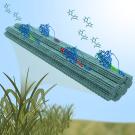
Some naturally occurring bacteria, called methanotrophs, can consume methane and use its carbon to produce biodegradable plastics, which are stored inside their cells. But producing plastic is only part of the puzzle. Recovering and purifying it from the bacteria contributes significantly to costs; thus, reducing these costs can help make methane-derived bioplastics economically competitive with conventional plastics.
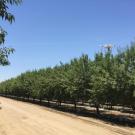
California’s processing tomato industry, for the first time this past harvest season, agreed to voluntary equipment cleaning and notification guidelines to prevent the spread of broomrape, a parasitic weed that attaches to roots and sucks out key nutrients.
The University of California, Davis, has received a gift of more than $25 million that will transform the advancement of agricultural technology and innovation for generations to come, made possible by a bequest from late philanthropist and local businessman Dan G. Best II.
The gift honors the enduring legacy of his grandfather, C.L. Best, an agricultural innovator and founding leader of Caterpillar Tractor Co., whose design of his first track-type tractor in 1912 still forms the basis for all current track-type machines used across the world today.
A new federally funded research project at the University of California, Davis, endeavors to extract valuable components for magnets, lasers and other modern technologies from an unlikely source: acidic wastewater from mines and industrial processes.
Research led by University of California, Davis, sheds new light on how to access the sugars locked up in plant materials to convert byproducts into new feedstocks to produce fuels, materials and chemicals.
Converting grasses, weeds, wood and other plant residues into sustainable products normally produced using petroleum products will be key to achieving carbon neutrality.
“We want to utilize plant residues and there is a lot of plant waste out there,” said Tina Jeoh, a professor of biological and agricultural engineering at UC Davis.
Researchers at the University of California, Davis, have developed a web application to help farmers and industry workers use drones and other uncrewed aerial vehicles, or UAVs, to generate the best possible data. By helping farmers use resources more efficiently, this advancement could help them adapt to a world with a changing climate that needs to feed billions.
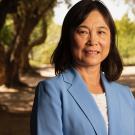
For decades, Ruihong Zhang, a professor in the Department of Biological and Agricultural Engineering has been studying biological conversion of food waste to explore solutions that could address environmental challenges. Her recent research on biodegradable plastics using dairy byproducts may reduce the global level of plastic pollution.
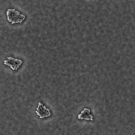
Artificial intelligence could be a valuable tool for the future of food safety. New research out of the University of California, Davis, finds that a technique using AI and optical imaging can quickly and accurately identify bacteria in food, making it a promising approach for preventing foodborne outbreaks and illnesses.
Post-harvest losses are common in the global food and agricultural industry. Research shows that storage grain pests can cause serious post-harvest losses, almost 9% in developed countries to 20% or more in developing countries. To address this problem, Zhongli Pan, an adjunct professor in the Department of Biological and Agricultural Engineering, has developed a potential solution.
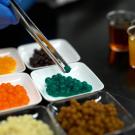
A solution to world hunger might start with boba and caviar.
Using an innovative process, engineers at UC Davis are growing “myco-foods” — small balls of edible fungi that can be processed into products like boba and lab-grown caviar with a wide range of textures, colors and flavors. These myco-foods, grown from the nutrients of agricultural byproducts like coffee grounds and almond hulls, provide an important new source of protein to feed the world.