What are the costs if climate change increases the risk of extinction of plants and animals? What value can be placed on reducing the risk of extinction of the white rhinoceros or American pika? And do people consider these things valuable even if they will never see a white rhinoceros or a pika in person?
That value — the “existence value”— is one of the ecological costs being calculated by researchers at UC Davis and Fordham University in order to improve the models currently used to calculate climate change damages, what’s known as the social cost of carbon.
Sixteen UC Davis researchers have been named in the annual Highly Cited Researchers 2019 list released by the Web of Science Group, which compiles statistics on scientific publishing. The list identifies scientists and social scientists who have published multiple papers ranking in the top 1 percent by citations in a particular field and year, over a 10-year period.
Citation counts represent how often a particular paper has been cited in other scientific publications.
UC Davis researchers included in this year’s list are:
Social networking, even between competing species, plays a much bigger role in ecology than anyone previously thought, according to three biologists at the University of California, Davis.
“There’s mounting evidence that different species pay attention to each other in the wild, especially if they share predators,” said Mike Gil, postdoctoral researcher at UC Davis. “The theory of ecology has lagged behind.”
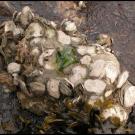
Ocean Acidification Just One of Several Climate-Related Threats for Shellfish
Ocean acidification is bad news for shellfish, making it harder for them to form their calcium-based shells. But several other factors related to climate change could also make California bays less hospitable to shelled organisms like oysters, which are a key part of the food web.
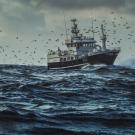
To Explore or Exploit? Fishing Vessel Records Show Trade-offs
When making choices, people tend either to go with what they know or try something new. We experience this trade-off every day, whether choosing a route to work or buying breakfast cereal. But does one strategy have an advantage over another? Researchers decided to examine this question by looking at fishing boat captains, who face this choice again and again when deciding where to fish.
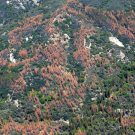
Treatments May Reduce Loss in Future Droughts and Bark Beetle Epidemics
Thinning forests and conducting prescribed burns may help preserve trees in future droughts and bark beetle epidemics expected under climate change, suggests a study from the University of California, Davis.
Study: ‘Remarkable’ Weather Becomes Normal Within a Few Years
What kinds of weather do people find remarkable, when does that change, and what does that say about the public’s perception of climate change? A study led by the University of California, Davis, examined those questions through the lens of more than 2 billion U.S. Twitter posts.
Spring Snowpack a Bigger Predictor of Lake Warming Than Air Temperature
Scientists at the University of California, Davis, are taking the temperature — and other measurements — of lakes of all sizes and shapes throughout the mountains of California to see how climate change is affecting them and what, perhaps, can be done about it.
High-quality agricultural index insurance has shown promise in promoting resilience among small-scale farmers who face a constant risk of drought and other weather-related shocks. However, despite decades of investments this tool has yet to achieve its broadest impact in part because of low-quality contracts that don’t reliably pay farmers for losses and that sometimes pay when there are none.
As increasingly hot and severe wildfires scorch the West, some lichen communities integral to conifer forests aren’t returning, even years after the flames have been extinguished, according to a study from scientists at the University of California, Davis.