Fish

DNA Test Reveals Conservation Gaps

Study Reveals Evolutionary History of Imperiled Salmon Stocks

New technologies for analyzing DNA may transform how imperiled species are considered and managed for conservation protection, according to a study published today in the journal Science Advances and led by the University of California, Davis.

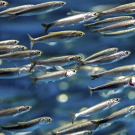
Social fish could save the reef

The social eating habits of fish may play a central role in protecting coral reefs, according to a study from the University of California, Davis, published April 10 in the journal Proceedings of the National Academy of Sciences.

Fish provide a critical service for coral reefs by eating algae that can kill coral and dominate reefs if left unchecked. The study, which analyzed the social feeding behavior of reef fish, suggests that overfishing not only removes vital algae-eaters, but it may cause remaining fish to eat less.

Freshwater or Saltwater? Why not both?

Researchers find salt-tolerant gene in tilapia

Most fish live either in freshwater or saltwater, but others, including tilapia, have the remarkable ability to physiologically adjust to varying salinity levels — a trait that may be critically important as climate change begins to alter the salinity of ocean and coastal waters as well as the water in desert lakes and creeks.

Reef Fish Risk it All for a Good Meal

Reef fish that conquer fear of sharks may help control excess algae.

If there was a top-rated restaurant in a dangerous part of the city, chances are some brave souls would be willing to risk it all for a delicious meal.

So it goes with coral reef fish dining on algae in French Polynesia, according to a study from the University of California, Davis.

Against the Tide

What can we learn from a fish that adapts quickly to lethal levels of pollution?

Evolution is working hard to rescue some urban fish from a lethal, human-altered environment, according to a study led by the University of California, Davis, and published Dec. 9 in the journal Science.

Saving Salmon

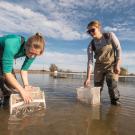
Research on the Shasta River and in the Central Valley creates new knowledge to help iconic species

The rivers and streams of northern and central California once teemed with millions of salmon, mostly Chinook and Coho. But these fish are in trouble—many salmon runs are listed as either threatened or endangered. A few scientists even predict the demise of wild salmon in the Central Valley by the year 2100.