Environment

How El Niño and Drought Affected the Trans-Atlantic Slave Trade

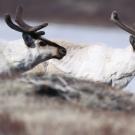
El Niño, an oceanic phenomenon that affects worldwide weather patterns, significantly affected the number of enslaved Africans transported from West Africa to the Americas between the mid-1600s and mid-1800s, according to a study from the University of California, Davis. 

Losing Winter

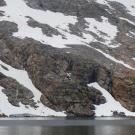
How small mountain lakes spend their winters is largely unknown to scientists, despite winter representing nearly half the year in such environments. A study by the University of California, Davis, helps demystify what happens above and below the ice. 

Just What Is a ‘Resilient’ Forest, Anyway?

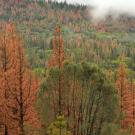
What does a “resilient” forest look like in California’s Sierra Nevada? A lot fewer trees than we’re used to, according to a study of frequent-fire forests from the University of California, Davis.

More than a century ago, Sierra Nevada forests faced almost no competition from neighboring trees for resources. The tree densities of the late 1900s would astonish most Californians today. Because of fire suppression, trees in current forests live alongside six to seven times as many trees as their ancestors did — competing for less water amid drier and hotter conditions. 

Study Challenges Evolutionary Theory That DNA Mutations Are Random

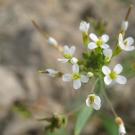
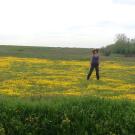
A simple roadside weed may hold the key to understanding and predicting DNA mutation, according to new research from University of California, Davis, and the Max Planck Institute for Developmental Biology in Germany. 

The findings, published today in the journal Nature, radically change our understanding of evolution and could one day help researchers breed better crops or even help humans fight cancer.

Coast Redwood and Sequoia Genome Sequences Completed

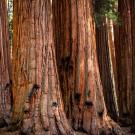
Scientists have completed the sequences for the coast redwood and giant sequoia genomes. The research, officially published this week in the journal G3: Genes, Genomes, Genetics, helps to better explain the genetic basis for these species’ ability to adapt to their changing environments. The research indicates that the coast redwood genome evolved from a single ancestral species.

“Fungi to save the world”

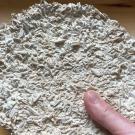
Mycelium, the white filament-like root structure of mushrooms, might be an important building block of a more sustainable world. By growing mycelium with a biomass—anything from coffee grounds to leftover agricultural waste—researchers at UC Davis are creating sustainable structures that can be turned into everything from biodegradable plastics and circuit boards to filters that remove harmful antibiotic and pesticide residues from water.

Pesticides Can Affect Multiple Generations of Bees

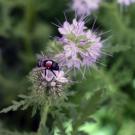
A new study from researchers at the University of California, Davis, finds that pesticides not only directly affect bee health, but effects from past exposure can carry over to future generations. The study, published in the journal Proceedings of the National Academy of Sciences, suggests that bees may require multiple generations to recover from even a single application.

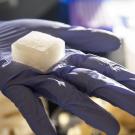
UC Davis Researchers Develop Ice Cube That Doesn’t Melt or Grow Mold

Researchers at the University of California, Davis, have developed a new type of cooling cube that could revolutionize how food is kept cold and shipped fresh without relying on ice or traditional cooling packs. 

These plastic-free, “jelly ice cubes” do not melt, are compostable and anti-microbial, and prevent cross-contamination. 

“When ice melts, it’s not reusable,” said Gang Sun, a professor in the Department of Biological and Agricultural Engineering. “We thought we could make a so-called solid ice to serve as a cooling medium and be reusable.”