Human & Animal Health

COVID-19 Taking a Toll on Everyday Lives, UC Davis Research Suggests

More Stress Expected as Lockdowns Continue, People Get Sick, Unemployment Persists

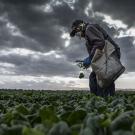
Rare research on the effects of a pandemic undertaken during an ongoing disaster shows that COVID-19 has severely affected people’s daily emotional lives and mental health, increasing their stresses the longer lockdowns, fear of getting sick and financial strains continue.

Social Distancing Varies by Income in U.S.

Poorer Communities Face Double Burden During Pandemic as They Stay Home Less

Wealthier communities went from being the most mobile before the COVID-19 pandemic to the least mobile, while poorer areas have gone from the least mobile to the most mobile, according to a study by the University of California, Davis.

Meet Cosmo, a Bull Calf Designed to Produce 75% Male Offspring

Scientists Use CRISPR Technology to Insert Sex-Determining Gene

Scientists at the University of California, Davis, have successfully produced a bull calf, named Cosmo, who was genome-edited as an embryo so that he’ll produce more male offspring. The research was presented in a poster today (July 23) at the American Society of Animal Science meeting.

A New Day is Dawning for Genetic Improvement in Livestock

The future of livestock breeding is taking shape at UC Davis. In the laboratory of animal scientist Pablo Ross, groundbreaking discoveries are being made that will pave the way for raising healthier, more productive and better-adapted cattle, sheep and other species.

In 2018, the Ross lab reported the first successful effort to grow embryonic stem cells from cattle in a petri dish. This milestone is a crucial step in the development of faster and more focused breeding programs.

Nomads and Commuters

Understanding cattle personality may help keep rangeland productive, sustainable

Do you ever wonder why sometimes one, lone cow stands munching grass on a hillside while her fellow cattle graze in groups below?

Animal behavior experts at UC Davis do, and their curiosity may shed light on one of the most critical economic and ecological questions in rangeland management. How can we encourage more cattle to roam?

A Message From the Dean - May 2020

Engaging thoughtfully with resolve to move us forward

There are numerous reasons the College of Agricultural and Environmental Sciences is a world leader in so many areas—bright students, hard-working staff and, of course, the willingness of our faculty to innovate and seek opportunities to keep California moving ahead whatever the circumstances.

CRISPR a Tool for Conservation, Not Just Gene Editing

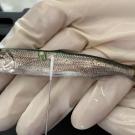
Scientists Use CRISPR to Rapidly Identify Endangered Delta Smelt and Its Look-Alikes

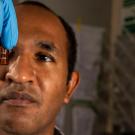
The gene-editing technology CRISPR has been used for a variety of agricultural and public health purposes — from growing disease-resistant crops to, more recently, a diagnostic test for the virus that causes COVID-19.

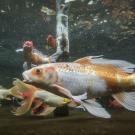
CABA personnel keeping an eye on fish

In a remote section of campus west of Highway 113, Matthew Stone and a few students are looking after the well-being of thousands of fish at the UC Davis Center for Aquatic Biology and Aquaculture. Stone is the assistant facilities manager at CABA.

“We have quite a large number of fish that we’re trying to take care of and they all have different needs that we need to address,” he said. “These are things we simply cannot skip over during a time like this.”