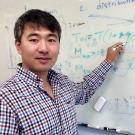
Da Yang, a UC Davis atmospheric scientist who studies the physics of intense rainstorms like hurricanes and their relationship to the Earth’s climate, has been awarded a 2019 Packard Fellowship in Science and Engineering from the David and Lucile Packard Foundation.
Yang is among 22 early-career scientists and engineers nationwide to receive the prestigious award this year. Each will be awarded $875,000 over five years to pursue their research. He is the first recipient of the Packard Fellowship in the College of Agricultural and Environmental Sciences at UC Davis.
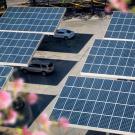
Study Outlines Advantages of Solar on Rooftops, Other Developed Areas
A study released today provides the most complete list yet of the advantages of solar energy — from carbon sequestration to improvements for pollinator habitat. The paper offers a new framework for analyzing solar projects to better understand the full suite of benefits.
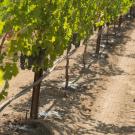
Study Finds a Climate-Smart Strategy for California Agriculture
As California faces more frequent and severe droughts, agriculture, which relies on irrigation from surface water and groundwater, could become expensive and unsustainable. Researchers at the University of California, Davis, looked at using a “free” resource — rain water stored in the soil — and found that optimizing its use could go a long way to help meet demand for five California perennial crops. Their findings appear in the journal Environmental Research Letters.
On Friday, April 12, graduate student Hannah Waterhouse was named one the 70 students from across the United States have been selected to pursue research at Energy Department National Labs as part of the Department of Energy's Graduate Student Research Program.
When Thunderstorms Brew Over the Tropics, California Heat Wave Soon to Follow
When heavy rain falls over the Indian Ocean and Southeast Asia and the eastern Pacific Ocean, it is a good indicator that temperatures in central California will reach 100 F in four to 16 days, according to a collaborative research team from the University of California, Davis, and the Asia-Pacific Economic Cooperation (APEC) Climate Center in Busan, South Korea.
Timing Could Make a Difference to Ease the Double Punch of Clams and Pumps
A combination of invasive clams and water pumping explains the drastic suppression of phytoplankton in the San Francisco Estuary, according to a study from the University of California, Davis.
Previous studies linked fish declines in the estuary in part to a limited supply of phytoplankton. These tiny microscopic algae make up the base of the food web: Fish eat zooplankton, which eat phytoplankton.
While clearing out your garden this fall, there’s no need for it to remain a blank, empty space until spring. If you have a year-round growing season, you can grow winter veggies and flowers, of course. But you can also add cover crops to your garden that improve the soil while you basically sit back and “watch the grass grow” –or the peas, clover and barley.
Devin Rippner receives Van Alfen/MacDonald Graduate Student Support Fund Award
Devin Rippner is the 2018 recipient of the Neal Van Alfen and James MacDonald Graduate Student Support Fund Award for his research and leadership on the environmental fate of metals and metal oxide nanoparticles in soil and water.
Rocks could hold key to carbon storage and improved global climate projections
For centuries, the prevailing science has indicated that all of the nitrogen on Earth available to plants comes from the atmosphere. But a study from the University of California, Davis, indicates that more than a quarter comes from Earth’s bedrock.