The College of Agricultural and Environmental Sciences broke ground October 15 on a new dairy goat parlor and creamery just south of campus near the existing Dairy Goat Teaching and Research Facility off Old Davis Road.
The 2,420 square-foot Noel-Nordfelt Animal Science Goat Dairy and Creamery will provide a California Department of Food and Agriculture inspected and approved facility for students, staff, faculty and industry stakeholders to process fluid milk and make cheese with state-of-the-art equipment. The project should take about eight months to complete.
USDA-funded project aims to uncover important genetic traits in cattle
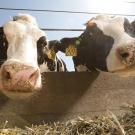
The cattle industry is the largest agricultural commodity in the United States, generating more than $100 billion in farm cash receipts in 2016. Despite cattle’s economic importance, scientists still have a long way to go to fully understand mechanisms that govern important genetic traits in the animals such as growth and disease resistance.
Inside the world’s first caviar farm that uses fish waste to grow vegetables
On a farm just outside of Sacramento, hundreds of prehistoric-looking fish swim around in 50-foot diameter tanks. These are white sturgeon, the largest freshwater fish in North America. They’ve been around since dinosaurs, can grow more than 7 feet long and lay hundreds of thousands of eggs at a time. The roe of these sturgeon are harvested for a boutique food producer regally named Tsar Nicoulai Caviar.
Expert sees dramatic reduction when cows consume seaweed supplement
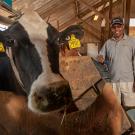
Seaweed may be the super food dairy cattle need to reduce the amount of methane they burp into the atmosphere. Early results from novel research at the University of California, Davis, indicate that just a touch of the ocean algae in cattle feed could dramatically cut greenhouse gas emissions from California’s 1.8 million dairy cows.
UC Davis animal welfare experts test ways to reduce broken bones
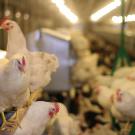
Consumers are clamoring for cage-free eggs, and producers are scrambling to meet the demand.
In 2017, nearly 16 percent of all hens in the U.S. were in cage-free production. According to the U.S. Department of Agriculture, about 75 percent of all laying hens will need to be cage free by 2026 to meet market demand.
Wild horses face an uncertain future on the mainland
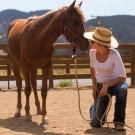
It's hot at El Campeon Farms, even for early August. A hard wind accompanies the heat, blowing through the Conejo Valley, where this horse ranch sits in Southern California. Abby Followwill is saddled on a horse named Vince. His golden-brown coat and blond mane stand out against the saturated blue sky and dusty corral where Followwill is training with him.
New findings could advance cattle production, help study human disease
For more than 35 years, scientists have tried to isolate embryonic stem cells in cows without much success. Under the right conditions, embryonic stem cells can grow indefinitely and make any other cell type or tissue, which has huge implications for creating genetically superior cows.
The Department of Animal Science’s mission is to create and disseminate knowledge about animals for the betterment of animals, society and the environment in California and beyond. Researchers integrate diverse aspects of the animal and environment, ranging from reduced detrimental emissions and effluent while preserving animal welfare and enhancing productivity and emphasizing healthful and safe aspects of products, wildlife habitat preservation and economic stability.
Some polar fish can cope with warming or ocean acidification, but not both together.
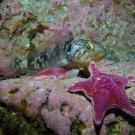
Some Antarctic fish living in the planet’s coldest waters are able to cope with the stress of rising carbon dioxide levels in the ocean. They can even tolerate slightly warmer waters.