Animal Science

Freshwater or Saltwater? Why not both?

Researchers find salt-tolerant gene in tilapia

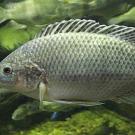
Most fish live either in freshwater or saltwater, but others, including tilapia, have the remarkable ability to physiologically adjust to varying salinity levels — a trait that may be critically important as climate change begins to alter the salinity of ocean and coastal waters as well as the water in desert lakes and creeks.

Editing for a healthy future

New genetic technology enhances animal health, welfare

Gene editing — one of the newest and most promising tools of biotechnology — enables animal breeders to make beneficial genetic changes, without bringing along unwanted genetic changes.

And, following in the footsteps of traditional breeding, gene editing has tremendous potential to boost the sustainability of livestock production, while also enhancing food-animal health and welfare, argues animal scientist Alison Van Eenennaam of the University of California, Davis.


Action Jackson Dies at 29

Prolific donkey is remembered fondly.

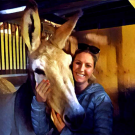
The UC Davis community recently lost one of its most venerable members, the 29-year-old donkey Action Jackson, who died Jan. 6 after standing at stud at the Horse Barn for two decades — siring well over 500 donkeys and mules — and, with his “talkative” behavior, entertaining countless visitors to the barn on La Rue Road.

Robust Coffee

Arabica coffee genome sequenced.
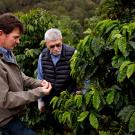
The first public genome sequence for Coffea arabica, the species responsible for more than 70 percent of global coffee production, was released today by researchers at the University of California, Davis.

Funding for the sequencing was provided by Suntory group, an international food and beverage company based in Tokyo.

Breeding Hill-Climbing Cows

Genetic test could help improve management of California’s 38 million acres of rangeland.

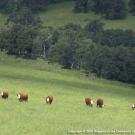
Most of the 5 million cattle that graze on California’s rangelands like to dine in the valleys and hang out by creeks. This can lead to overgrazing in riparian areas and let perfectly good forage on hillsides go to waste.

But some cows are different. They prefer to climb hills and mountains and eat along the way. If more cattle followed the road less traveled, rangelands would be more productive and sustainable throughout California and the West.

How Vaccines Ward Off Deadly Chicken Disease

Findings offer clues to how to boost immunity in humans

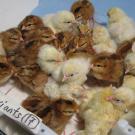
A new study from University of California, Davis, and the U.S. Department of Agriculture describes how vaccines work against a deadly virus in chickens, and could offer a model for related human diseases such as chickenpox.

Nestbox Highway

Thanks to the Putah Creek Nestbox Highway, there are more songbirds in Northern California.

The Putah Creek Nestbox Highway research project is one of the most comprehensive songbird nestbox studies in the west U.S. 

Scientists and Zoos Team Up on Landmark Elephant Welfare Project

Nine-study elephant project is largest of its kind to date

Given that elephants are the largest land mammals on the planet, one might expect that when it comes to enclosures for zoo elephants, size matters.

However, a newly released study in which the University of California, Davis, played a key role reveals that social interactions and having an array of opportunities to engage with their surroundings may be more important to elephants’ welfare than space.