Human & Animal Health

Flour and Oil

Researcher improves global health by fortifying common ingredients.

Reina Engle-Stone was halfway through her biology degree at Cornell University when she discovered global nutrition.

Her introduction was a nutritional epidemiology class, and almost immediately she was hooked. “You could take biology and apply it to other things. I thought, this is great, this is what I want to do,” she says.

A Personal Scientific Journey

Wildlife biologist Tim Caro earns his “zebra stripes” with new book.

The distinct black and white stripes of zebras capture people’s attention and imagination from an early age. But rarely are we told why zebras have those stripes to begin with.

The question has intrigued UC Davis wildlife biology professor Tim Caro for more than a decade.

How Vaccines Ward Off Deadly Chicken Disease

Findings offer clues to how to boost immunity in humans

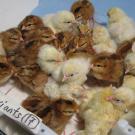
A new study from University of California, Davis, and the U.S. Department of Agriculture describes how vaccines work against a deadly virus in chickens, and could offer a model for related human diseases such as chickenpox.

Why Do Seabirds Eat Plastic? The Answer Stinks

Marine Plastic Debris Is An Olfactory Trap for Seabirds

If it smells like food, and looks like food, it must be food, right?

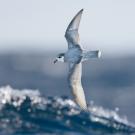
Not in the case of ocean-faring birds that are sometimes found with bellies full of plastic. But very little research examines why birds make the mistake of eating plastic in the first place.

Saving Salmon

Research on the Shasta River and in the Central Valley creates new knowledge to help iconic species

The rivers and streams of northern and central California once teemed with millions of salmon, mostly Chinook and Coho. But these fish are in trouble—many salmon runs are listed as either threatened or endangered. A few scientists even predict the demise of wild salmon in the Central Valley by the year 2100.

Nestbox Highway

Thanks to the Putah Creek Nestbox Highway, there are more songbirds in Northern California.

The Putah Creek Nestbox Highway research project is one of the most comprehensive songbird nestbox studies in the west U.S. 

Milk Truck Microbial Study Aims to Improve Dairy Food Safety and Quality

Findings are key for California, the nation’s largest dairy producer

Fresh, or raw, milk transported from farms to dairy processing facilities in tanker trucks contains a diverse mix of microbes, which varies from season to season, report researchers at the University of California, Davis.

Microbes with the potential to cause disease are destroyed during milk pasteurization, but not all bacteria and their associated enzymes are eliminated by that process. The remaining bacteria retain the ability to cause spoilage and quality defects in dairy foods.


Frogs That Can Take the Heat Expected to Fare Better in a Changing World

Climate Change May Outpace Deforestation as Habitat Threat in Tropics

Amphibians that tolerate higher temperatures are likely to fare better in a world affected by climate change, disease and habitat loss, according to two recent studies from the University of California, Davis.

Frogs are disappearing globally, and the studies examine why some survive while others perish. The studies reveal that thermal tolerance — the ability to withstand higher temperatures — may be a key trait in predicting amphibian declines.